
What Are the Best Core Exercises?
Core Training is to be specific, intentional, and Purposeful. Going through the motions doesn’t cut it when it comes to the integrity of the core. The best core exercise includes a well-rounded, full-body approach that touches all areas of the core and it’s many responsibilities.
A Strong core makes movement fluid and effortless. The center transfers energy between the lower and upper body. As seen in most rehab programs and a significant component in recovery, core training wins.
Core strength helps improve overall body strength and prevent injuries and muscle imbalance. In addition, the core impacts anatomy in numerous ways. For example, weak obliques can cause uneven hips.
Weak rectus abdominal muscles and tight hip flexors contribute to Anterior Pelvic Tilt, a lower body change of posture that tilts the pelvis forward.
Weak core muscles such as the TVA and pelvic floor muscles leave the lower back vulnerable and under-protected.
The source of all major movements of the body, the core, energizes everything we do.
Athletes, weekend warriors, and the general population become resilient when training has variety and depth.
After all, a Strong Core allows you to keep up with the daily grind, minimize pain and reduce the chance of Injury.

Injury Prevention
The body undergoes strenuous activity every day. However, we may not realize how involved the core muscles are in everything we do. Whether you move a lot or not, the core is affected somehow. A sedentary lifestyle wrecks havoc on our posture and can lead to problems.
Excessive sitting can cause postural changes. Hip problems and rounded shoulders are common in people who work desk jobs.
The body adapts to these movements, which leads to reduced muscle recruitment. Dysfunctional movement causes weakness and predisposes the body to pain and Injury.
When weakness dominates, core imbalances are likely. Uneven hips, shoulder issues, and low back pain are some examples.
The way we move and exercise impacts the body. Movement awareness and exercise techniques are essential for injury prevention. When unknown compensations exist, they cause muscle imbalances. The same goes for core exercises with limited variety.
For example, A 30-day sit-up challenge isn’t practical. During sit-ups, you move in one plane of motion, and your lumbar spine is constantly flexing. This exercise targets the Rectus Abdominis, the visible abdominal muscles, with little benefit to core muscles. In addition, too much spinal flexion can lead to lumbar disc fragility and other spinal issues.
BODY CONTROL- The Muscles of the Core
A stronger core means more body control.
The body moves in three planes of motion known as frontal (Front and back), sagittal (left and right), and transverse planes (Rotation).
The primary trunk movements are flexion, extension, rotation, and lateral flexion.
The core connects to about 29 muscles, and multiple muscle groups attach to the pelvis, spine, and hips.
The muscles move the skeletal system. Torque, the driving force of human movement, responds through the amount of strength the muscles output.
The primary core muscles are the Erector spine, pelvic floor muscles, transverse abdominis, multifidus, internal and external obliques, rectus abdominis, and diaphragm.
These muscles act to stabilize and protect our spine. They transfer force through the body and prevent from having poor posture and lower back, hip, and knee pain. Core training needs depth for better overall function.

How to Train the Core
Everyone’s body is different; find what’s suitable for you. Not everyone feels the same after doing back extensions or medicine ball slams, but it helps to know what core exercises are best for your body and fitness level.
You may benefit from planks to improve posture if you sit a lot. If you have APT, you may want to add dead bugs to teach the deep core muscles how to control the pelvis. Training can vary depending on your goals, but it’s important to address different areas.
Listen to your body to keep muscle imbalances to a minimum and develop a significant core function. Knowing your body helps; a professional movement assessment can help you.
A good core workout challenges all core muscle groups and uses multiple angles and planes of movement.
Training should include Core Stabilization, Anterior Core Exercises, Lateral and rotational core conditioning, posterior chain training, core endurance, and explosive core conditioning. I have all of these movements here.
A good core program will include all components weekly as a well-rounded approach results in a functional, healthy body.

Core Stabilization- The key to unlocking full capacity
Core Stabilization is generally the first phase. It ties into all training aspects of the core. Lack of Stability around the center is counter-productive to performance and movement efficiency and leaves you vulnerable to Injury and pain. The body’s stabilization system primarily comprises spinal stabilization and supporting muscles.
There are two types of core stability, Intervertebral and lumbopelvic stability.
A brief understanding of the two will clarify how to train your core and why it’s essential.
- Intervertebral Stability
Intervebral stability minimizes movement between the vertebrae.
The deep core muscles, transverse abdominis TVA diaphragm, and pelvic floor muscles help prevent movement within the spine. The drawing-in maneuver is a great way to avoid this.
- Lumbo-Pelvic Stability
Lumbo-Pelvic stability helps minimize movement between the rib cage and the pelvis. In addition, isometric bracing helps stabilize the lumbopelvic region.
Both are essential areas to engage in during a core workout.
1. Intervertebral Stability
Intervebral Stability minimizes movement between the vertebrae.
The deep core muscles such as the transverse abdominis TVA diaphragm and pelvic floor muscles help prevent movement within the spine. The drawing-in maneuver is a great way to avoid this.
2. Lumbo-Pelvic Stability
Lumo-Pelvic Stability helps minimize movement between the rib cage and the pelvis. Isometric bracing helps stabilize the lumbo-pelvic region.
Isometric bracing
Isometrics are static contractions of the muscles with no change in joint angles. In other words, the length of the muscles does not change. Many fitness professionals use isometric exercises for strength training and rehab programs.
The Anterior Core

The anterior core primarily helps stabilize the hips and spine and teaches the body to resist excessive lumbar extension. In other words, it keeps your spine from over-rotating (Anti- Rotation) and hyperextending (Anti- Extension). In addition, the Anterior Core handles significant power output.
The anterior core primarily consists of the Transverse Abdominis TVA, Rectus Abdominis, and External obliques. The muscles that increase stiffness and stability, such as the TVA and rectus abdominis, are examples of muscles located near the joint they support.
The local muscular system and stabilization system support the global muscular system, which is the Movement system that allows the bodies to distribute force efficiently. Both methods work together to allow proper activation and recruitment.
Anterior Core Exercises:
- Reverse Crunch
- Plank Variations
- Ball Rollout
- Dead Bug (Muscles Targeted: Transverse Abdomnis, Pelvic Floor, and Erector Spinae)
How to Perform:
- Starting Position
- Lie on your back, lift your hands in line with your shoulders, and lift your legs with knees bent at 90 degrees. Position knees over the hip.
- Engage your core, and lower back, touching the floor.
- Slowly lower the opposite arm and opposite leg at the same time away from the center of the body.
- Arm straight overhead and leg straight towards the floor.
- Bring the arm and leg to the starting position simultaneously. Alternate both sides without losing core engagement.
Lateral /Rotational Core
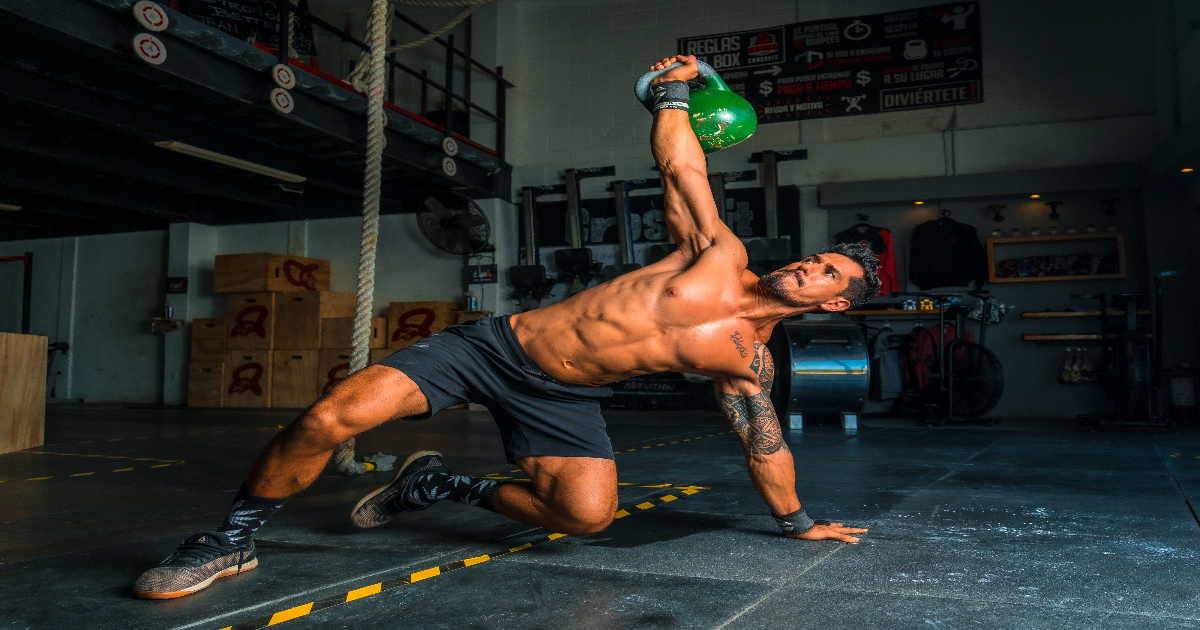
All sports and daily activities involve some level of lateral and rotational movements. The transverse plane consists of twisting, throwing, and change of direction. The Functional movements transfer to torso stability, gait, jumping, running, climbing stairs, and so on.
Lateral training and frontal plane movement work the stabilizer muscles differently than most linear core exercises.
In addition to increased body balance and coordination, lateral exercise strengthens muscles and tendons surrounding joint structures in the hips, knees, and ankles.
Lateral Exercises:
- Seated Twist
- Pall of Press Variations
- Star Iso Hold
- Renegade Row
- Side Plank Twist (Muscles Targeted: Internal and External Obliques)
How to Perform:
- Starting Position:
- Lay on your side and extend your legs, one foot on top of the other.
- Keep your legs straight and prop your body onto your forearm. Position elbow directly under the shoulder.
- Engage your core, maintain a neutral spine and lift your body to balance on your arm and feet.
- In the side plank position, keep your core engaged and twist your torso down towards the floor, maintain a high plank position, and rotate your torso back to a straight line.
- Repeat for desired reps.
Posterior Core

While most core exercises protect the spine, the posterior chain consists of some of the largest muscles in the body. The major muscles of the posterior chain are the gluteus muscles, latissimus dorsi, hamstrings, erector spine muscle group, trapezius, and deltoids.
The posterior chain is also known as the Deep Longitudinal Sub-System, one of the body’s central movement systems. The DLS stretches from the lumbar spine down to the heel.
Developing a solid posterior chain helps to build a strong posture and greatly enhances strength and power gains. Hence the powerhouse of our bodies.
Posterior muscle strength helps balance out the body. Many forward head postures and rounded shoulders stem from overactivity of the anterior muscles and weakness of the posterior muscles.
Posterior chain muscles are dominant towards acceleration, deceleration, and landing.
Posterior Chain Exercises:
- SL Bridge
- Eccentric Slider Leg Curls
- Standing Hip Abductions
- SB Leg Curl
- SL RDL (Muscles Targeted: Gluteus Maximus, Hamstring, Lower Back)How to Perform:
- Start with your left leg from standing, and apply pressure on your heel and big toe while flexing your arch for balance.
- Lean forward at the hip while lifting one leg back into space with toes pointed down and slightly inward. (This helps keep the pelvis from rotating.)
- Keep the knee slightly bent in the stationary leg and stick the butt back as you hinge forward.
- Maintain a neutral spine. Hinge until the body is parallel to the floor and as you come back up, bring your hips forward by using your glutes to return to starting position.
Core Power/Explosiveness

The core is our powerhouse and generates force from the upper to lower body and vice versa. Therefore, developing core power must be emphasized if we want to initiate upper and lower body energy.
You can be vital in your lower or upper body, but we need the addition of a solid core to translate that power to its most excellent capacity.
No matter the activity, high levels of responsiveness of the core muscles result in upper and lower body power.
Core Power/Explosive Exercises:
- Ball Slams
- Ball Rotational Throws
- Sit Up Rot Ball Slams
- SIT-UP Ball Throw
- Knee Tucks (Muscles Targeted: Core, Glutes, Hamstrings, hip flexors, arms)How to Perform
- Starting Position
- Standing feet hip-width apart, knees bent
- Jump and pull knees towards the chest
- Land softly with a slight knee bend to absorb
- Repeat for desired Reps or time
Core Endurance

A crucial component of core conditioning is endurance because it supports spinal stability for long periods. In addition, maintaining an efficient trunk position for extended periods may benefit performance.
Runners, for example, should have good levels of core endurance, depending on their activity level.
The goal is to have the ability to maintain a strong upright posture and decrease the chances of spinal strain and injuries.
Core Endurance helps prevents energy leaks from other areas of the body.
The last thing we want is for the core muscles to fatigue because it can cause the disc to become vulnerable.
The bottom line, build the core strength capacity of all muscle groups.
Core Endurance Exercises
- Plank
- Iso Superman
- Hollow Progressions
- Hollow Hold (Muscles Targeted: Transverse Abdonimis, Rectus Abdominis, Hip Flexors, Quads, obliques, inner thigh, and erector SPINE muscles.
How to Perform:
- Starting Position:
- Lay face up with arms extended overhead.
- Engage your core and lift your legs.
- Bring Shoulder blades off the floor.
- Keep the center tight and hold the position for desired time.
- Return to start.
- Repeat for desired reps.
- Breathing should be natural while maintaining core engagement.
Conclusion

There are various ways to train the core, and it is essential to do it correctly. To get more benefits, include every component.
Core strength protects our spines, reduces our chances of Injury, and enhances our overall stability and performance. We run faster, jump explosive, and have more control over our bodies.
A functional core is responsive to all we do in everyday life.
By including all training components in your core workout, the body can withstand rigorous daily activity. As a result, we are increasing the longevity of our physical health.
Feel free to leave a comment about your best core exercise or routine you find effective. Thanks for Reading!